Plan Your Trip to Amalfi
The town that names the coast: cathedral tickets, ferries, and buses along Italy's Amalfi Coast, sorted out.

The town that names the coast: cathedral tickets, ferries, and buses along Italy's Amalfi Coast, sorted out.
If you only need a basic ticket, park fee, or boat slot for Amalfi, the official operator is usually the best place to buy: schedules and weather cancellations come from the source. If you want a smoother booking flow for cruises, guided hikes, or multi-activity days (mobile tickets, free cancellation on many offers), a trusted partner can be a good alternative. Confirm the date and inclusions before you book.

Best for standard access or operator-run services at Amalfi when you want published rates and direct terms.
Useful for day trips, boat or viewpoint packages, and digital tickets when visiting Amalfi from a nearby city in Italy.
Choose the operator for simple access. Choose a partner when transport, guiding, or flexible cancellation around Italy is the priority.
Hand-picked Amalfi tickets and tours on Headout. Prices and availability update on the partner site; confirm inclusions before you book.


Pompeii Guided Tour and Amalfi Coast Day Trip

Positano, Amalfi & Ravello Guided Tour

Amalfi Coast Small-Group Full-Day Tour from Naples

The striped Moorish-Byzantine facade of the Duomo di Sant'Andrea rises over a staircase at the heart of town, with the Cloister of Paradise tucked beside it.
Amalfi was one of Italy's four historic maritime republics, and the Arsenale della Repubblica, its medieval shipyard, still stands as a reminder of that naval power.
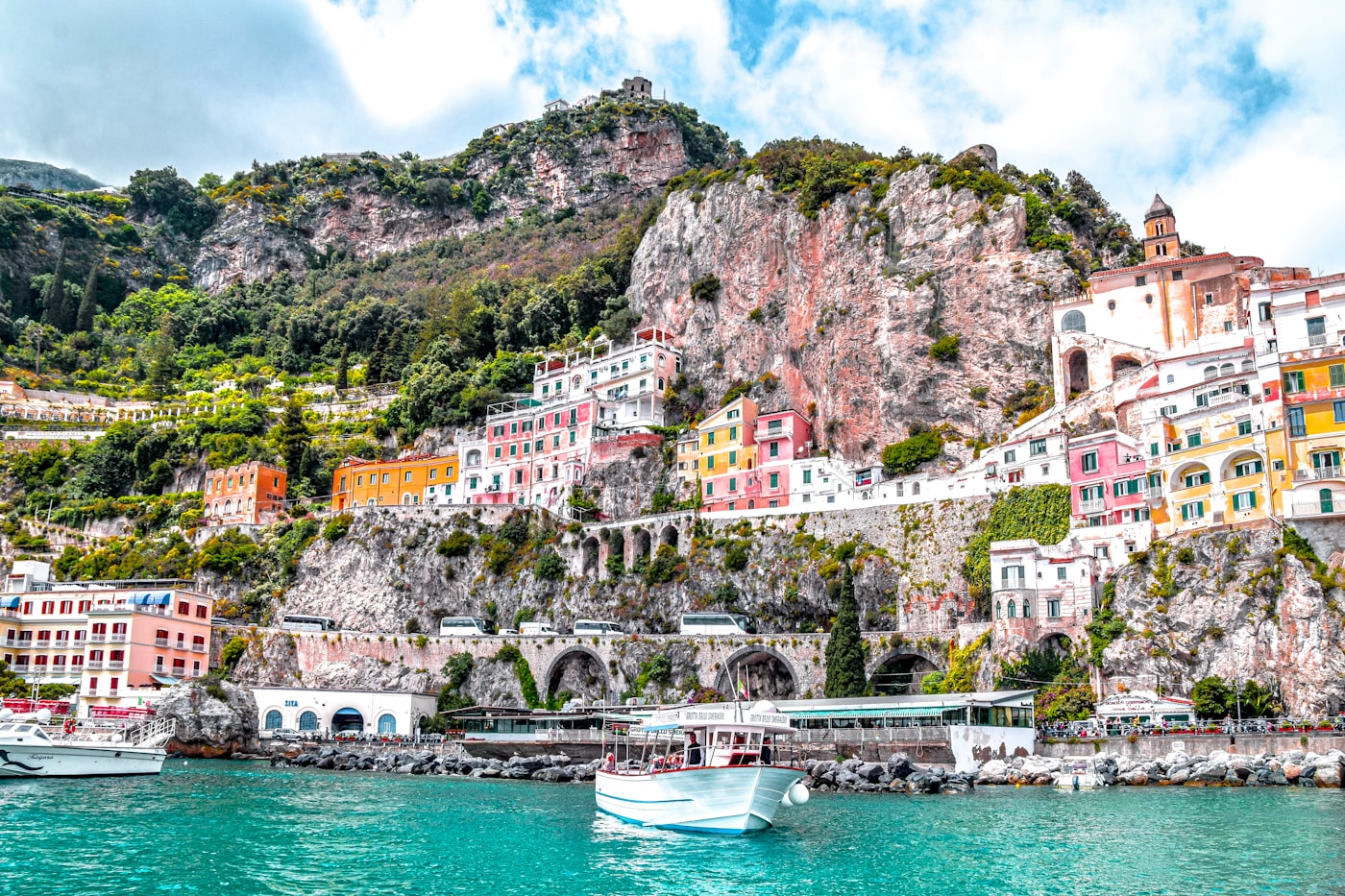
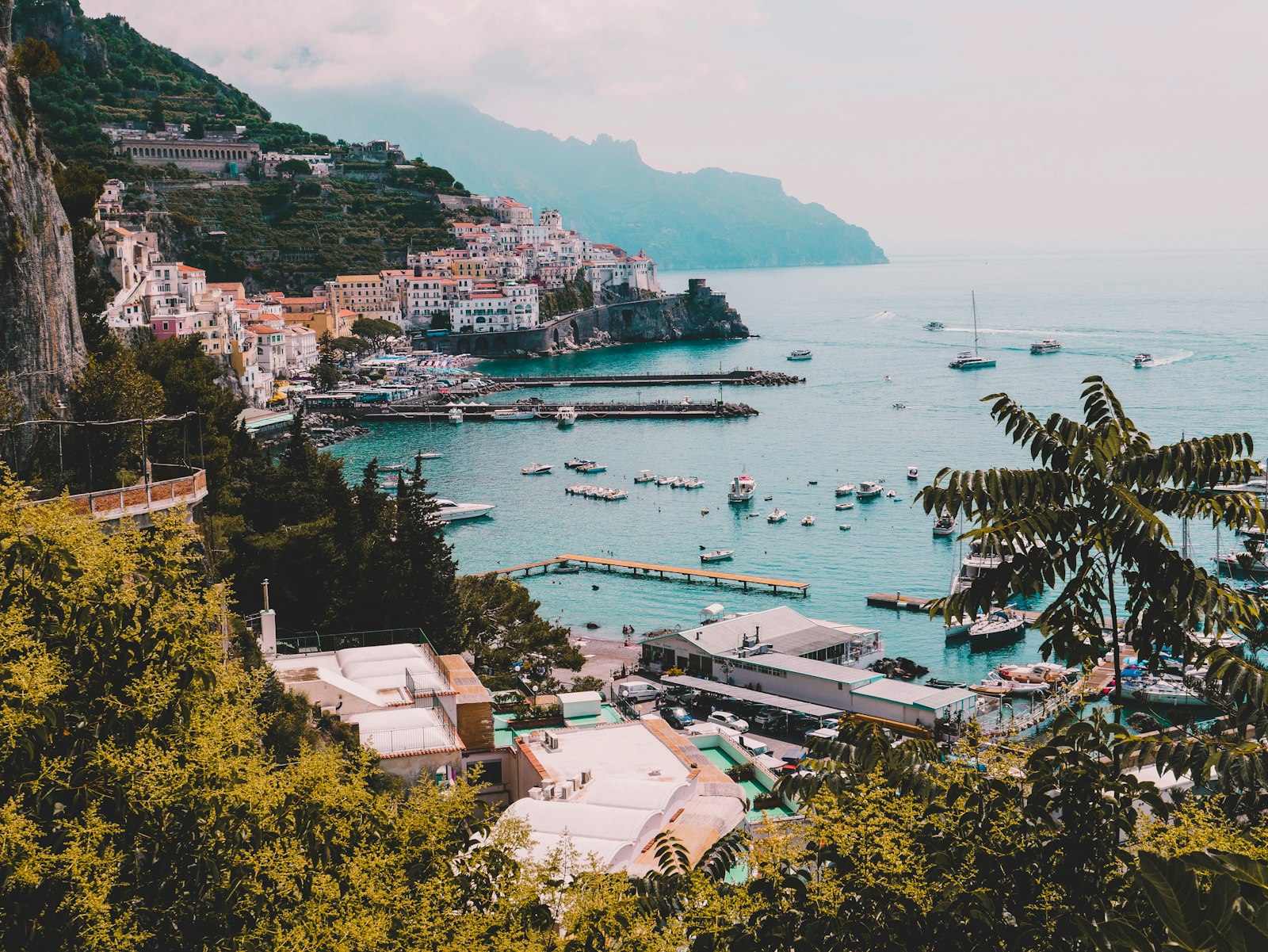
Compact and largely car-free in its center, Amalfi's lanes lead from the harbor to lemon groves and trailheads above town.
Amalfi's center is largely pedestrian, and street parking is scarce and expensive. Most visitors leave the car outside town or skip driving entirely.
The SS163 coastal road is narrow, congested, and slow in summer. Ferries between coastal towns are often faster and come with better views.
Regional buses connect every town on the coast, but they fill quickly and run behind schedule in peak season, so build in extra time.
Hours, prices, and access rules change. Confirm details on the official Amalfi site (or your partner booking confirmation) before you go.
A cathedral with a striped Moorish-Byzantine facade and bronze doors, reached by a monumental staircase over the main piazza.
A 13th-century cloister of interlaced Arab-Norman arches, part of the Duomo complex.
A medieval shipyard from Amalfi's days as a maritime republic, now hosting exhibitions on the town's naval history.
The small working harbor and seafront promenade, departure point for coastal ferries.
A nature reserve trail up a wooded gorge behind town, past waterfalls and old paper mills.
A paper museum housed in a former mill, tracing Amalfi's centuries-old handmade paper tradition.
A tiny neighboring village a short walk around the headland, often overlooked by day-trippers.
Do I need a ticket to enter the Duomo?
The cathedral nave is usually free, but the Cloister of Paradise, crypt, and museum are covered by a small combined ticket bought on-site.
Is it better to take the ferry or the bus?
Ferries (roughly April through October) are often faster and more scenic than the SITA bus or driving, especially between coastal towns. The bus is cheaper and runs year-round but can be slow and crowded in summer.
Should I rent a car to get around the coast?
Most visitors don't. Parking is scarce and expensive, and the coastal road is narrow and congested; ferries and buses cover the coast well.
How do I buy bus tickets?
At a tabacchi (tobacco shop) or newsstand before boarding, not from the driver. Validate the ticket once on board.
When is the best time to visit?
Late spring (April to June) and early fall (September to October) bring warm weather with fewer crowds than peak summer, when the coast road and ferries are both busy.
Is Amalfi walkable?
Yes. The historic center is compact and mostly pedestrian, though many lanes involve stairs climbing away from the harbor.
Amalfi gives its name to the coast it sits on, in the Campania region of southern Italy. Between the 9th and 11th centuries it was capital of the Maritime Republic of Amalfi, one of Italy's four historic naval powers alongside Venice, Genoa, and Pisa, trading across the Mediterranean.
Today the town is a compact cluster of lanes and stairways around its striped cathedral and small harbor, backed by cliffs and lemon terraces. It remains the cultural and transport hub of the Amalfi Coast, a UNESCO World Heritage Site.